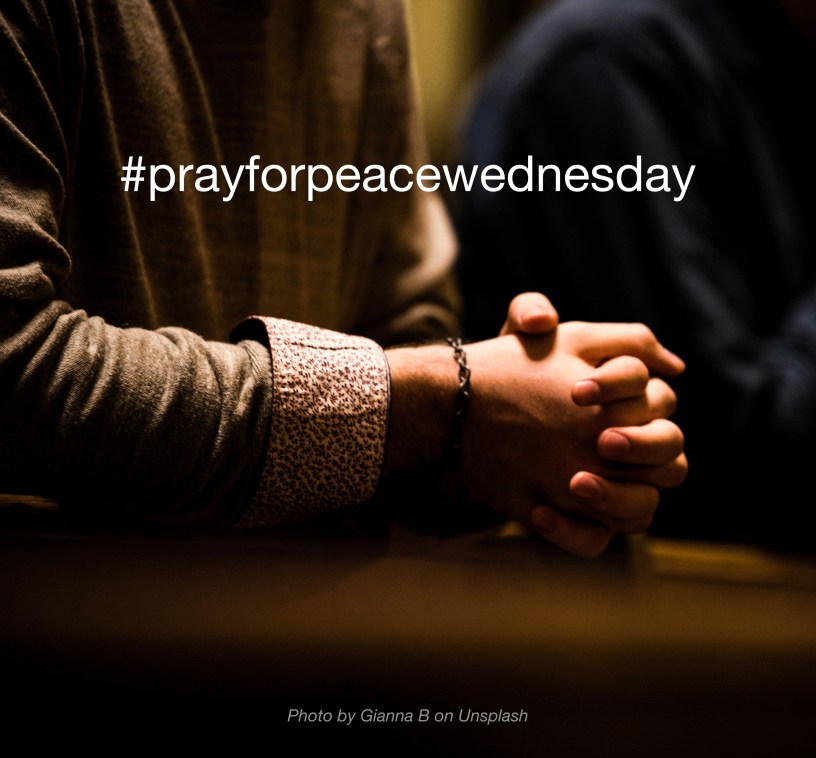
I was fasting in Lent 2024 and sensed a growing tug on my heart to pray for peace in areas of the world where things felt stuck, especially in the terrible conflicts in Ukraine and in Gaza/ Israel. I then received an email from a woman called Clare, asking if, as a bishop, I would begin to lead some prayers for this. I sensed this wasn’t a coincidence and perhaps a prophetic call and so, having talked with my prayer partners and the Bishop of Manchester, I began #prayforpeacewednesday, praying weekly for an end to conflict in various war-torn parts of the world, and I’ve done so ever since.
Prayer
I’ve been praying for peace each Wednesday in a variety of ways. Most of the time I’ve taken one or two places of conflict, and simply called out to God for peace. As well as praying for politicians and emergency services, I regularly pray that peace-makers would be raised up, listened to, and set free to find a way to bring reconciliation. I always pray for the innocent victims of war in these places, and for God’s comfort for those suffering and grieving. War is an awful thing.
Most weeks I’ve been putting out a short social media post, inviting others to join me in praying for peace in specific areas of the world. Sometimes I give a steer, encouraging prayer for a particular place or issue, while trying to be fair to the nations involved and not overly political. I’ve also led some Facebook Live prayers at 12noon on Wednesdays, and occasionally I’ve pre-recorded these if I’m not free at 12noon, which I hope has a helpf to those who’ve joined in. An important moment of corporate prayer was leading #prayforpeacewednesday prayers in Manchester Cathedral on the Wednesday of Holy Week in 2024. Leading peace-prayers in that historic location, with the huge statue of Mahatma Gandi (the Indian leader who stood up for peaceful resistance) standing outside on the Cathedral forecourt, meant the prayers felt particularly symbolic and important, as we prayed for peace particularly in Gaza. Although it’s taken a long time, I am relieved that now, some ten months later, there is finally a ceasefire in Gaza, and hopefully all surviving Israeli hostages will be returned, and Palestinians lives and communities can begin to be rebuilt.
Fasting
Not many know that the catalyst for #prayforpeacewednesday was fasting, or that fasting is still something I do, along with a number of others, especially on a Wednesday. Missing one or more meals in this way is about intentionally becoming weak, as I embody my prayers and ask God to reveal his strength and bring his powerful peace. When I fast in this way, I find myself agreeing with Jennifer Miskov, who says that ‘Fasting is a sign of our inability to effect the change needed in our society apart from his grace.’ While some may consider it preposterous that our prayers coupled with fasting, might make any difference on a global scale, but followers of Christ have always believed they can.
The Didache, for example, an early Christian document on worship written around AD 100, says: ‘pray for your enemies, and fast for those who persecute you.’ Clearly these early followers of Jesus were convinced that fasting could help change the hearts of belligerent people. Basil the Great, the fourth century Bishop of Caesarea, went further, stating: ‘if all were to take fasting as the counsellor for their actions, nothing would prevent a profound peace from spreading throughout the entire world.’ More recently, Rees Howells, the 20th century intercessor who founded The Bible College of Wales, is another example of a leader-in-prayer who fasted for world peace and for the greater good of society. Howells was especially inspired by John Wesley, the eighteenth century founder of the Methodist movement. Wesley, seeking the renewal of British society, asked in the so-called ‘Large’ Minutes of Methodism: ‘What may we reasonably believe to be God’s design in raising up the preachers called Methodists? To reform the nation and, in particular, the Church; to spread scriptural holiness over the land.’ Wesley expressed this vision through his work, and particularly through regular prayer and fasting, with Methodist ministers required to pray with fasting at least two days per week.
Intercession
These leaders along with many others have believed that our intercessory prayers do make a difference, especially when we fast. It’s why I’ve written about it in a book that’s coming out soon called The Art of Fasting. Of course we don’t do this to order God about, and neither do we promise that every prayer we pray will be answered as we desire. Instead, we pray. We do this for all sorts of things, in church and society, and for the wider world, including interceding for peace (Psalm 122:6). We pray because Jesus tells us to; it’s central to his Sermon on the Mount and part of Christian discipleship (Matthew 6:6), as is fasting (Mt 6:16). It’s what the saints of old did. Maybe they were onto something, for when we intercede, we’re mirroring what Christ himself is now doing for us as he intercedes from heaven (Hebrews 7:25). This means there can be few more life-giving and Christ-like tasks, than to intercede in prayer and fasting.
So for all who long for the peace of the world: let us pray.

 matthewporter.blog
A thought provoking article, highlighting the importance of persistent prayer 🙏
Such a helpful, inspiring and motivating post. Really looking forward to reading your new book on the Art of Fasting. This is an art and practice that the Church desperately needs to recover.